
5 Warning Signs of Rats in Attic Florida Homeowners Shouldnt Ignore

A quiet attic can turn into a rodent highway without much warning. In Florida homes, rats and mice often slip in through small gaps along the roofline, soffits, vents, fascia boards, pipe openings, and other weak spots that are easy to miss from the ground.
By the time the signs become obvious, rodents may already be nesting, chewing, and contaminating areas above the living space.
The good news is that early detection makes a big difference. Knowing what to listen for, what to look for, and what to do next can help protect your home before the problem spreads. For homeowners in Port St. Lucie and across the Treasure Coast, these are the five warning signs worth taking seriously.

Why rodents get into Florida attics so easily
Florida homes give rodents many opportunities to get inside. Warm weather, dense landscaping, palm trees, food sources, and year-round breeding conditions can keep rat and mouse activity steady.
Attics are especially attractive because they are:
Warm and sheltered
Usually quiet during the day
Close to roof access points
Filled with soft insulation for nesting
Protected from many outdoor predators
Rats and mice do not need a large opening. A mouse can squeeze through a very small gap, and a rat can take advantage of surprisingly tight spaces if the edges are soft or damaged. Loose soffit panels, roof return gaps, torn vent screens, construction openings, lifted flashing, and gaps around utility lines can all become entry points.
This is why many homeowners do not realize they have a problem right away. The entry hole may be hidden behind a gutter, under a roof edge, or tucked into a shaded corner of the home. From the driveway, everything may look normal.
If you suspect rodents, the goal is not just to remove what is inside. Long-term protection depends on finding and sealing how they got in.
1. You hear scratching or scurrying in the attic at night
One of the most common first signs is noise above the ceiling.
Rodents are usually most active after dark. Homeowners may hear scratching, scurrying, squeaking, light thumping, or movement that seems to travel across the attic. The sound may be more noticeable late at night or early in the morning when the home is quiet.
Common places to hear rodent activity include:
Above bedrooms
Near bathroom or kitchen vents
Along exterior walls
Around attic access panels
Near garage ceilings
Inside wall voids
Rats tend to make heavier sounds than mice, but even small rodents can sound loud when they move across ceiling drywall or insulation. The noise may come and go, which can make the issue easy to dismiss.
If the sounds repeat over several nights, especially in the same areas, it is time to inspect. Do not bang on the ceiling, place poison in the attic, or assume the animal will leave on its own. Rodents often return to the same nesting area if the entry point remains open.
For homeowners searching for help with rats in attic Florida problems, a trained inspection is the safest next step.
2. You find droppings or notice unusual odors
Rodent droppings are another strong warning sign. They may appear in the attic, garage, pantry, laundry room, under sinks, or along baseboards. In attics, droppings are often found near insulation, air handlers, stored boxes, and travel paths along beams or wall edges.
Mouse droppings are small and pointed. Rat droppings are larger and more noticeable. Fresh droppings tend to look darker, while older droppings may look faded or dry.
Odor can also be a clue. A rodent infestation may create a musky smell, especially in enclosed attic spaces with poor airflow. Stronger odors may come from urine, nesting areas, or, in some cases, an animal that died inside a wall or attic void.
Rodent contamination is not something to brush aside. Droppings and urine can affect insulation, stored belongings, and areas near ventilation equipment. If you find droppings, avoid sweeping or vacuuming them without proper precautions, since that can disturb particles and spread contamination.
A professional can identify the type of rodent, estimate the level of activity, and recommend safe cleanup steps.
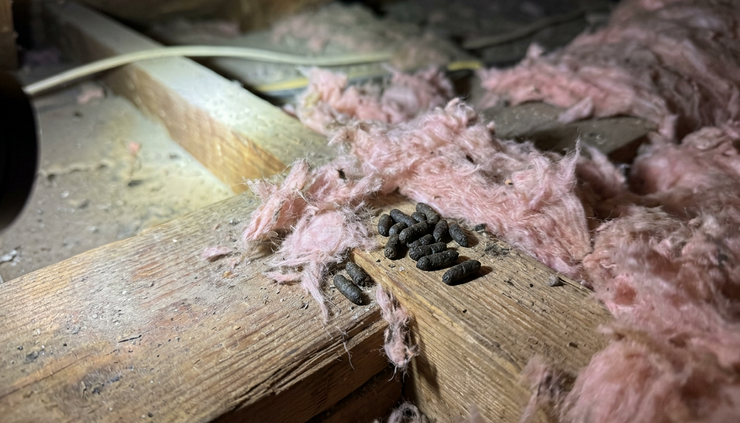
3. You see chewed wiring, insulation, or stored belongings
Rodents chew constantly. Their teeth keep growing, so gnawing helps keep them worn down. Unfortunately, attics often contain plenty of materials they can damage.
Common chewing damage includes:
Electrical wiring
HVAC duct insulation
Blown-in or batt insulation
Cardboard storage boxes
Holiday decorations
Plastic bins and lids
Wood framing edges
Flexible vent lines
Chewed wiring is one of the biggest concerns. Damaged electrical insulation can create a fire hazard if the wiring remains energized. Damage to ductwork or insulation can also affect energy efficiency and air quality.
Stored items in the attic may show gnawed corners, shredded paper, torn fabric, or small holes in plastic bags. Sometimes the damage is found before any rodent is seen.
If you notice chewing, do not touch exposed wires. Turn off power to the affected area if it is safe to do so, then contact a qualified electrician for electrical concerns and a pest professional for rodent removal and exclusion.
Ignoring chewing damage can lead to higher repair costs. It can also allow a small problem to grow into a larger infestation.
4. You find nesting materials or disturbed attic insulation
Rodents build nests using soft, shredded materials. Attic insulation is ideal for this. They may also use paper, fabric, leaves, twigs, plastic, and pieces of stored items.
Signs of nesting may include:
Tunnels through blown-in insulation
Flattened or hollowed-out insulation areas
Shredded paper or fabric
Piles of debris in corners
Insulation pushed away from a wall or beam
Warm, compact nesting pockets
Disturbed insulation can look like trails, dips, or uneven patches. In some attics, rodents create repeated runways along the same path. These trails may connect entry points to nesting spots and food sources.
This matters because insulation does more than fill space. It helps regulate indoor comfort and energy use. When rodents tunnel through it, contaminate it, or compress it, the insulation may not perform as it should.
Nesting also suggests the rodents are not just passing through. They may be living and breeding inside the structure.
For homeowners needing rodent removal Port St. Lucie, nesting evidence is one of the key details an inspector will look for during an attic assessment.

5. You notice grease marks, gnaw marks, or small holes along the roofline
Rodents often use the same routes again and again. As they squeeze through openings, oils and dirt from their fur can leave dark smudges called rub marks or grease marks. These marks may appear near holes, vents, pipes, soffit edges, fascia boards, or roof returns.
Outside the home, watch for:
Dark smudges near roof gaps
Chewed edges around openings
Small holes near the soffit or fascia
Damaged vent screens
Gaps under roof tiles or shingles
Openings where utility lines enter
Droppings near exterior walls or AC pads
Gnaw marks may look like rough, scraped, or widened edges around a gap. Rodents may chew a small weakness into a larger entry point over time.
This is where many DIY efforts fall short. Setting traps inside may remove a few rodents, but the problem returns if the entry points remain open. Rodent control is most effective when removal and exclusion happen together.
A thorough inspection should include the roofline, attic, vents, soffits, garage, foundation openings, and any areas where trees or shrubs touch the home.
What can happen if rodent activity is ignored
Rodent issues rarely improve on their own. If rats or mice have food, shelter, and access, they are likely to stay.
The main risks include:
Property damage
Rodents can chew insulation, wiring, wood, ducts, stored items, and vent lines. The longer they remain, the more areas they can damage.
Contamination
Droppings, urine, and nesting materials can contaminate attic insulation and storage areas. Some cleanup may require protective equipment and careful handling.
Electrical hazards
Chewed wires are a serious concern. Any sign of damaged electrical wiring should be handled quickly by the right professionals.
Odors and dead rodents
If rodents die inside walls, attic spaces, or crawl areas, odors can spread through the home and become difficult to trace.
Repeat infestations
A home with unsealed entry points remains vulnerable. Even if some rodents are removed, others can move in later.
The goal is not to panic. The goal is to act early, confirm what is happening, and fix the access points before the issue becomes more expensive.
What to do next if you suspect rodents in the attic
If you hear noises or see signs of rodents, a few practical steps can help.
Do a careful visual check from inside the home
Look for droppings, odors, gnawed items, and ceiling stains near the attic access. If you can safely view the attic entrance without entering, use a flashlight and avoid disturbing insulation.
Do not walk through the attic unless you know where to step. Ceiling drywall cannot support body weight, and attic spaces may contain hazards.
Check the exterior from the ground
Walk around the home during daylight and look up at the roofline. Pay close attention to soffits, fascia boards, vents, gutters, and roof intersections.
Look for gaps, dark rub marks, chewed edges, or loose materials. Also check whether tree limbs touch the roof, since rodents can use branches as bridges.
Remove easy food and shelter sources
Outside the home, reduce attractants where possible:
Keep garbage lids sealed
Pick up fallen fruit
Store pet food indoors
Avoid leaving birdseed on the ground
Trim shrubs away from exterior walls
Cut back branches that touch the roof
Keep garage and storage areas tidy
These steps will not solve an attic infestation by themselves, but they make the property less inviting.
Avoid sealing holes too soon
This surprises many homeowners. If rodents are active inside, sealing every hole immediately can trap them in the attic or walls. That can lead to odor, damage, and more stress.
A professional will usually identify active entry points, remove or trap rodents using the right methods, then seal openings after activity is controlled. This process helps prevent animals from being trapped inside.
Why professional removal and sealing matter
Rodent control is not just about catching one rat or mouse. A complete plan should answer three questions:
What type of rodent is present?
How are they getting in?
How can the home be protected after removal?
Professional pest and wildlife technicians know where to look for hidden access points. They also understand how Florida rooflines, soffits, vents, and construction gaps can create rodent entry routes.
A good service plan may include:
A full attic and exterior inspection
Identification of droppings, trails, and nesting areas
Rodent trapping or removal
Entry-point sealing and exclusion work
Recommendations for sanitation or insulation concerns
Follow-up inspections to confirm activity has stopped
Follow-up matters because rodent pressure can continue, especially in Florida neighborhoods with canals, wooded lots, fruit trees, dense landscaping, or nearby construction. The best results come from removal, exclusion, and monitoring together.
For homeowners comparing pest control Port St. Lucie options, look for a company that handles both the pest issue and the structural entry points. That combination is key for long-term protection.

How Rogue Pest & Wildlife Removal can help
Rogue Pest & Wildlife Removal serves Port St. Lucie and Florida’s Treasure Coast with professional rodent and wildlife services. If you suspect attic activity, the team can inspect your home, identify signs of rats or mice, locate likely entry points, and recommend a plan to remove the problem and help keep it from coming back.
That may include rodent removal, exclusion repairs, and follow-up inspections based on what the property needs. The focus is simple: solve the current issue and reduce the chances of repeat activity.
If you need dependable wildlife removal Treasure Coast service, getting an inspection early is one of the smartest steps you can take.
Schedule a professional rodent inspection
Scratching noises, droppings, chewed materials, disturbed insulation, and roofline gaps are all signs that rodents may be using your attic. Even one of these clues is worth checking, especially if it keeps happening.
Rats and mice can enter Florida homes through openings many homeowners never notice. Once inside, they can damage property, contaminate insulation, and create electrical concerns. Fast action can help limit the damage and give you a clear path forward.
For professional rodent removal in Port St. Lucie and across the Treasure Coast, contact Rogue Pest & Wildlife Removal today.
Call 772-342-0262 to schedule a professional inspection.


Comments