
7 Signs You Have Raccoons in Your Attic in Port St. Lucie, FL

Hearing heavy footsteps or strange noises above your ceiling at night?
You may have more than a small rodent running around up there. Raccoons can get into attics, and once inside, they can create noise, damage, contamination, and other problems for homeowners.
For homeowners in Port St. Lucie, Florida, knowing the signs of a raccoon in your attic can help you recognize a wildlife problem before it gets worse.
Here are seven signs that a raccoon may have made its way into your home.
1. Heavy Thumping or Walking Sounds at Night
One of the biggest clues is the type of noise you're hearing.
Rats and other small animals often create lighter scratching and scurrying sounds. A raccoon is much larger and may sound more like:
Heavy footsteps
Thumping
Shuffling
Scratching
Something moving or dragging across the attic
Because raccoons are primarily active at night, you may notice these sounds after sunset or during the early morning hours.
If it sounds like something surprisingly large is walking above your ceiling, it's worth investigating.
2. Damage Around Your Roof or Soffits
A raccoon needs a way into your attic.
Look around your home's exterior for damaged or disturbed areas, particularly around the roofline.
Possible entry points can include:
Damaged soffits
Roof vents
Fascia
Loose or damaged screening
Existing roof openings
Areas where building materials have deteriorated
Raccoons are strong animals and may take advantage of an existing weak spot to gain access.
Some entry points aren't obvious from ground level, which is one reason a professional exterior inspection can be helpful.
3. Raccoon Droppings in or Around the Attic
Droppings are another possible indication of wildlife activity.
If you're finding animal droppings inside your attic or around an area where an animal appears to be entering the home, don't handle them with your bare hands.
Wildlife waste can contaminate attic areas and should be treated carefully.
An inspection can help determine what type of animal is responsible and whether additional cleanup may be necessary.
4. Strong or Unusual Odors
A persistent smell coming from your attic can indicate that an animal has been spending time there.
Urine, feces, nesting material, or other contamination can produce noticeable odors.
If an unusual smell appears alongside nighttime noises or visible damage around your roof, you may be dealing with an active wildlife problem.
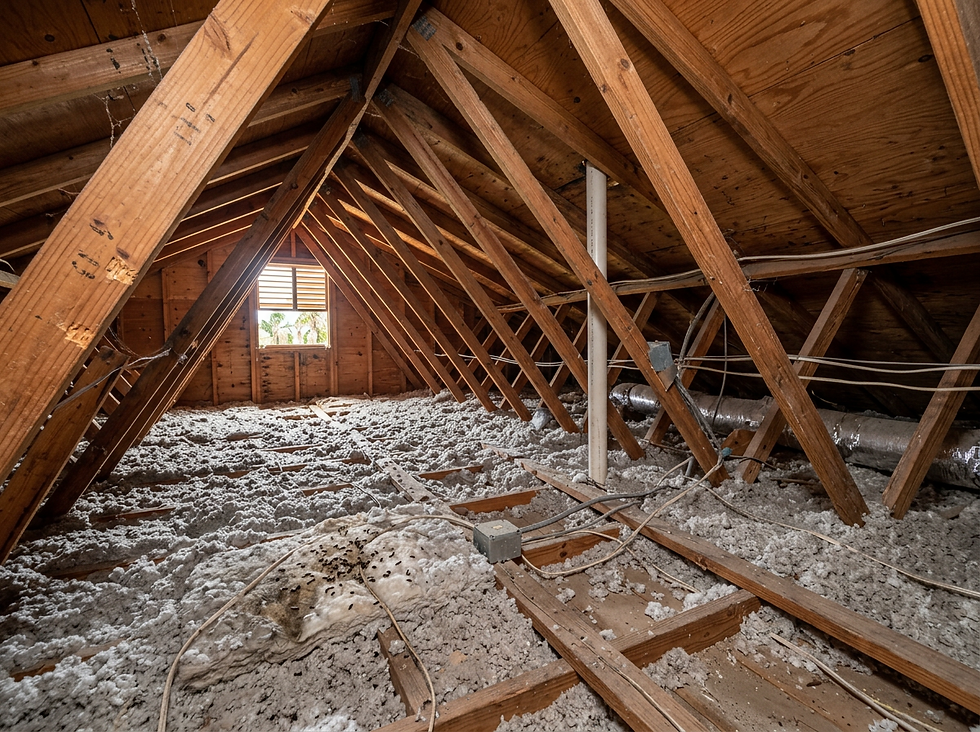
5. Damaged or Disturbed Attic Insulation
Raccoons don't necessarily stay in one small area after entering an attic.
They may walk across, compress, move, or contaminate insulation while creating a place to shelter.
Signs may include:
Flattened insulation
Disturbed insulation
Trails through insulation
Nesting areas
Urine or fecal contamination
Attic damage can sometimes provide useful clues about the size and type of animal that's been moving through the space.
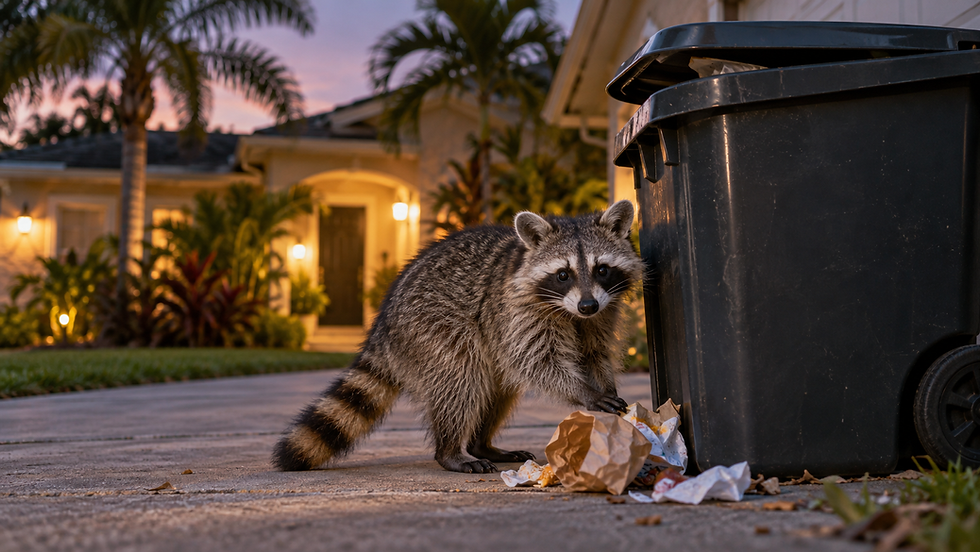
6. Raccoon Activity Around Your Home
Seeing raccoons around your property doesn't automatically mean they're living in your attic.
However, frequent raccoon activity combined with attic noises should get your attention.
You may notice raccoons:
Traveling along fences
Climbing near the roofline
Moving through your yard at night
Spending time near garbage or other food sources
Entering or exiting a particular area of the roof
If you actually see a raccoon entering your home, you've found an important clue—but don't immediately seal the opening.
There could still be another raccoon inside.
7. Baby Raccoon Sounds Coming From the Attic
This is an especially important sign.
A female raccoon may use a protected attic space when raising young.
If you hear unusual vocalizations or smaller animals moving around in addition to the heavier movements of an adult, there could potentially be babies present.
This makes simply sealing an entry hole particularly risky.
If a mother is outside while her young remain inside, sealing the opening can separate them and create a much larger problem.
What Should You Do If You Think a Raccoon Is in Your Attic?
Avoid trying to grab, corner, or handle the raccoon yourself.
You should also avoid immediately sealing suspected entry points until you've confirmed that the animals are no longer inside.
A wildlife inspection can help answer three important questions:
What animal is inside?
How is it getting into the home?
What needs to be done to prevent the problem from continuing?
Addressing the entry point is an important part of solving the problem.
Removing an animal without addressing how it entered can leave the home vulnerable to future wildlife activity.

Raccoon Removal in Port St. Lucie, FL
If you suspect you have a raccoon in your attic in Port St. Lucie, Rogue Pest & Wildlife Control can help.
We provide wildlife-control services for homeowners in Port St. Lucie and throughout the Treasure Coast.
We can inspect the property for signs of wildlife activity, identify potential entry points, and determine the appropriate solution for your home.
Think You Have a Raccoon in Your Attic?
Don't wait for the noises or damage to get worse.
Contact Rogue Pest & Wildlife Control to schedule a wildlife inspection in Port St. Lucie, Florida.
We'll help determine what's inside your attic, how it got there, and what should be done next.
Comments