
Rats in the Attic in Palm City How to Protect Your Home

A faint scratching sound above the ceiling can turn a quiet Palm City night into a stressful one. Rats are quick, quiet, and skilled at finding tiny openings around rooflines, vents, soffits, and gaps where utilities enter the home. Once they reach the attic, they can chew, nest, contaminate insulation, and create an ongoing problem that rarely goes away on its own.
Palm City homes are especially attractive to rats because the area offers what they need: warmth, shelter, trees, water, fruiting plants, pet food, and easy access to rooflines. The attic gives them protection from predators and weather, which is why quick action matters.
If you suspect rats overhead, the goal is simple: confirm the activity, stop entry, remove the rats safely, and protect the home from future infestations. You can also find help through our website by visiting our rat removal service page or requesting support through our contact page.

Why rats get into Palm City attics
Rats do not need a large opening to enter a home. A small gap near a roof return, vent cover, pipe entry, or loose soffit panel can be enough. Once inside, they follow warmth, scent trails, and shelter.
In Palm City, many homes have features that make attic entry more likely:
Tree branches near the roof
Tile roofs, shingle edges, or roof returns with small gaps
Older vent screens or damaged soffits
AC lines, plumbing penetrations, and utility openings
Fruit trees, bird feeders, compost, pet food, or open trash nearby
Dock, canal, and wooded areas that support wildlife movement
Rats are strong climbers. They can move along fences, vines, gutters, trees, and walls. A roofline that looks secure from the ground may have several access points that are easy for rats to use at night.
The most common attic invaders in Florida are roof rats. They are agile and often nest above living spaces. They may not be seen inside the home at first, but they can leave clear signs in the attic and around the exterior.
Signs you may have rats in the attic
The first sign is often noise. Homeowners may hear scratching, scurrying, chewing, or light thumping after sunset or before sunrise. Rats are most active at night, so daytime silence does not mean the issue is gone.
Common signs include:
Scratching or running sounds above ceilings
Droppings in the attic, garage, or near utility areas
Chewed wires, air ducts, wood, cardboard, or stored items
Greasy rub marks near holes or along beams
Nesting material made from insulation, leaves, paper, or fabric
A stale, musky odor in the attic or walls
Pet interest in ceilings, cabinets, or garage corners
Small holes around soffits, vents, fascia, or roof edges
Do not ignore chewing sounds. Rats chew constantly to manage their teeth. In an attic, that can mean damage to wiring, ductwork, insulation, and stored belongings.
A single rat can also be a sign of a wider issue. If one found a way in, others may use the same opening. That is why trapping alone is not enough. The openings must be found and sealed.

Why attic rats should be handled quickly
Rats are more than a nuisance. Once they settle into an attic, they can create problems that affect comfort, cleanliness, and home repairs.
They can damage insulation and ducts
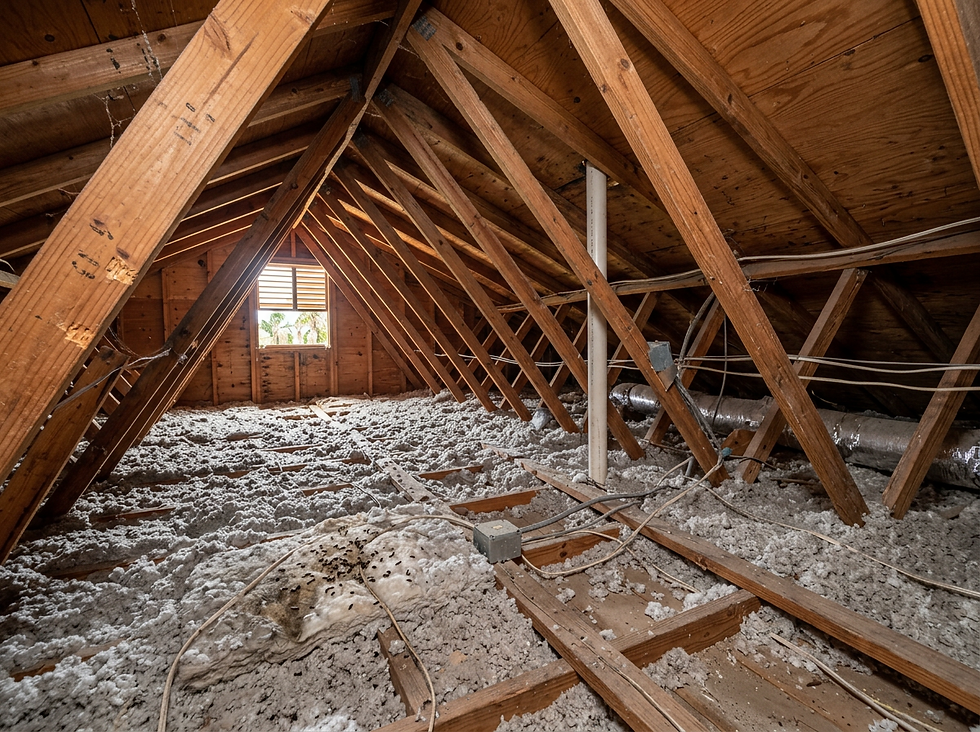
Rats tunnel through insulation and use it for nesting. Over time, insulation can become compressed, contaminated, or displaced. If ducts are chewed or damaged, conditioned air may leak into the attic instead of reaching living areas.
They can chew wiring and building materials
Chewed wiring is a serious concern. Not every chewed wire creates an immediate emergency, but damaged electrical components should be inspected by a qualified professional. Rats may also chew wood, PVC, stored boxes, and flexible vent materials.
They can contaminate attic spaces
Rat droppings, urine, nesting debris, and dead rodents can leave odors and unsanitary conditions. Cleanup should be handled carefully, especially in enclosed attic spaces with insulation and dust.
They can multiply if entry points stay open
Rats breed quickly when food and shelter are available. An attic with open access can become a repeat nesting space. If the exterior is not sealed, new rats may enter after old ones are removed.
What to do when you hear rats overhead
If you hear activity, avoid rushing into the attic without a plan. Attics can be dangerous because of low visibility, loose insulation, wiring, narrow joists, and heat. A careful approach helps prevent damage and keeps the problem from spreading.
Start with a simple sound check
Write down when you hear noises. Note whether they happen at night, early morning, or during the day. Rats are often active after dark. Squirrels are more common during daylight hours. This timing clue can help identify the animal, though it is not a complete diagnosis.
Look around the outside of the home
Walk the perimeter during daylight and look for possible entry points. Focus on:
Roof returns and corners
Soffits and fascia boards
Gable vents and attic vents
Gaps around pipes or AC lines
Garage trim and door seals
Areas where tree branches touch the roof
Do not seal holes right away unless you are sure no animals are inside. Sealing active rats into an attic or wall can make the problem worse.
Remove easy food sources
Small changes outside the home can reduce attraction.
Store pet food indoors
Pick up fallen fruit
Use trash cans with tight lids
Keep bird seed in sealed containers
Clean grill areas and outdoor kitchens
Avoid leaving pet bowls outside overnight
These steps will not remove rats from the attic, but they help reduce pressure around the home.
Avoid poison inside the attic
Poison can create another problem. A rat may die inside a wall, ceiling void, or duct area, leaving odor and cleanup issues. Poison also creates risks for pets and non-target wildlife. A better plan usually includes inspection, trapping, exclusion, and cleanup.
The safest long-term solution is exclusion
Exclusion means sealing the home so rats cannot get back inside. This is the step that separates a short-term fix from a lasting solution.
A professional exclusion plan usually includes:
Inspecting the full roofline and exterior
Identifying active and potential entry points
Setting traps in the right attic locations
Sealing holes with rodent-resistant materials
Repairing vents, soffits, fascia gaps, and utility penetrations
Checking for sanitation needs after activity stops
The materials matter. Rats can chew through weak foam, thin plastic, and soft materials. Entry points often need metal flashing, hardware cloth, sealant, vent guards, or proper carpentry repairs, depending on the location.
For Palm City homes, roofline work is especially important. Many entry points are above eye level. That means a ground-level inspection can miss the real problem. If you need help identifying likely openings, you can start with our home inspection request page.

How professional rat removal usually works
Every home is different, but a complete service follows a clear process. The exact steps may vary based on attic layout, roof design, and activity level.
Inspection
The first visit should identify signs of rats, likely entry points, travel paths, and damage. The technician should inspect the exterior as well as the attic where access is safe.
Trapping and removal
Traps are placed based on rat movement, not randomly. Good trap placement reduces the time needed and limits disturbance in the attic. The goal is to remove active rats before final sealing.
Entry point sealing
Once the plan is clear, openings are sealed with materials suited for rodent pressure. This may include vent screening, metal repairs, roofline sealing, soffit repair, or protection around utility openings.
Monitoring
Follow-up checks confirm that activity has stopped. If new signs appear, the home may need additional sealing or trap adjustments.
Cleanup and restoration
After the rats are gone, the attic may need cleanup. Light activity may only require basic removal of droppings and nesting material. Heavy contamination may require insulation removal, sanitation, deodorizing, or insulation replacement.
Removal without exclusion is incomplete. If the opening remains, the attic can attract new rats.
How to prevent rats from coming back
Prevention is easier than another infestation. After the attic is cleared and sealed, keep the exterior less inviting.
Trim branches away from the roof when possible. Keep vines from climbing walls or touching soffits. Repair damaged screens, vents, and loose trim quickly. Check garage door seals and weatherstripping. Store outdoor food sources in sealed bins.
A seasonal inspection can also help. In Florida, wildlife pressure does not stop for long. Warm weather, rain, storms, and plant growth can create new gaps or access routes. After strong wind or roof work, it is smart to check attic vents, soffits, and roof edges again.
If your home has had rat activity before, keep an eye on the same areas. Rats often reuse old routes if repairs fail or nearby openings remain.
When to call for help
Call for help if you hear repeated attic noise, find droppings, smell strong odors, or see possible entry points near the roof. You should also get support if you are not comfortable entering the attic, if the attic is heavily contaminated, or if damage involves wiring or ductwork.
A qualified rat removal service can find the source faster and reduce the chance of repeat activity. This matters in Palm City, where roof rats can move easily between trees, fences, sheds, and homes.
If you are dealing with rats in the attic in Palm City, the best next step is to get the home inspected and sealed before the damage grows. Visit our Palm City rat control page to learn more, or use our online contact form to request help through our website.

Protect your attic before the problem spreads
Rats in the attic rarely leave for good without a reason. If the space offers shelter and the roofline stays open, they can keep coming back. The best fix combines removal, sealing, cleanup, and prevention.
Listen for signs, check the exterior, reduce food sources, and avoid quick fixes that leave entry points open. When you are ready for help, our website makes it easy to take the next step. Visit our rat removal service page or reach out through our contact page to get started.


Comments